Archive

Archive for the ‘Culture’ Category

Neal Stephenson’s Take On Saving The Novel

September 2nd, 2010 Dr Leo Strauss 3 comments

Everyone knows books and long form reading in general are in a slow fade. The Chronicle of Higher Education asks if the book will survive:

Three years ago, Weidenfeld & Nicolson launched its Compact Editions series of classics such as Vanity Fair and Moby-Dick. The publisher explained that they’d been “sympathetically edited so that most of them are under 400 pages,” but that the cuts “in no way detract from the spirit of the original.” Surgery simply rendered such classics less “elitist.” Dripping drollery in The Times of London, critic Richard Morrison opined that truth in advertising behooved the publisher to adjust titles as well, perhaps to Vanity Off-Peak Fare, and Mini-Dick.

Any wonder that last year, two cheeky University of Chicago undergrads with literary parents—Alexander Aciman and Emmett Rensin—published Twitterature (Penguin), boiling down classics of world lit to 140-character bone? Here’s their speed-read version of The Epic of Gilgamesh: “@UrukRockCity—Great. That’s it. I’m leaving Uruk. My best friend in the world is dead, all because the gods couldn’t handle our bromance.”

The signs of readerly surrender pop up everywhere. Princeton student Isia Jasiewicz, reviewing a book for Newsweek this summer as an intern, admits in her last paragraph that she bothered to read only the first 10 pages. Linda Nilson, director of the Office of Teaching Effectiveness at Clemson University, posts a piece titled, “Getting Students to Do the Reading” on the Web site of the National Education Association, advising: “Look for readings with graphics and pictures that reinforce the text, and pare down the required pages to the essentials. The less reading assigned, the more likely students will do it.”

Science fiction author Neal Stephenson is putting his action where his fiction is. He’s created a company to help re-invent the book for our fractured times.

[He's] been credited for inspiring today’s virtual world with his novel Snow Crash. Now he’s launching a startup himself: Subutai, where he is co-founder and chairman.

The company, based in Seattle and San Francisco, has developed what it calls the PULP platform for creating digital novels. The core of the experience is still a text novel, but authors can add additional material like background articles, images, music, and video. There are also social features that allow readers to create their own profiles, earn badges for activity on the site or in the application, and interact with other readers.

One can’t help but be encouraged that Stephenson is trying. Still, we wandered through a largely empty Barnes & Noble this evening, marveling again that the vast majority of items on display were really products, so-called ‘books’ in masquerade. As the Chronicle article cited above observed, the book’s demise is separate from the sideshow of ebooks vs. bricks and mortar/Big Box-Style Outlets. Imagine all this same ‘merch’ enriched with shouting, braying, linking, tweeting multimedia technology ala PULP and Subatai or some other approach.

Scary innit?

Post to Twitter Tweet This Post

Categories: Acolytes In Aktion, Culture, Pop Culture Tags:

Obama On Iraq: A Weak Speech By A Weak President

August 31st, 2010 Dr Leo Strauss 10 comments

Oama’s speech on slinking out of Iraq positively pulsated with weakness. Not for reasons Rightist wing nuts might rage.

His content and delivery raise alarming implications about who really will control key American foreign policy decisions ahead: his hopey changey rhetoric or David Petraeus et al. Obama reveals he himself is unsure.

We don’t fault him on Iraq or the need to go through the motions of praising the catastrophe. He’s merely following the Bush timetable.

Our critique rests on how he handled the military in this delicate moment. We saw a young man unsure of his authority over the military and overcompensating clumsily. Think the proverbial step parent with the skeptical, hostile teenager stepchild. Attempts to lay down rules are mocked and the step parent’s role denied – openly or passively. That’s his military. He missed an opportunity to correct things before a national audience.

Read more…

Post to Twitter Tweet This Post

Getting Away From It All

August 28th, 2010 Dr Leo Strauss 5 comments

Here’s a hope that everyone enjoys the weekend. That you, Dear Reader, can tune out the media led fixation on the ankle biters downtown.

It’s an unholy brew. A rootless media seeks any form of self-generating narrative for lazy producing, story selection, Nielsens and click throughs. And the Movement? It follows centuries of Counter Enlightenment impulsive tradition using public theater to create false narratives and communal identity. All fodder for the 15 minute news cycle and shallow tweets.

We chose to visit Annapolis to start off the weekend. Sure, it’s long been a tourist trap. And like nearby D.C. it’s self-satisfied, bloated and keenly aware of its wealth. Still, it’s not far up Route 50. The Severn River retains echoes of boating memories many decades ago. Plus, traffic to the overcrowded (and even more overbuilt) Delaware beaches too daunting. One notable thing – young men in their twenties lounging around the Naval Academy entrance wearing the old ‘Blackwater’ paw t-shirts and Oakleys. Without irony, too.

Where were we? Oh right. The high school play downtown.

Read more…

Post to Twitter Tweet This Post

Barack Obama vs. The World

August 26th, 2010 Dr Leo Strauss 5 comments

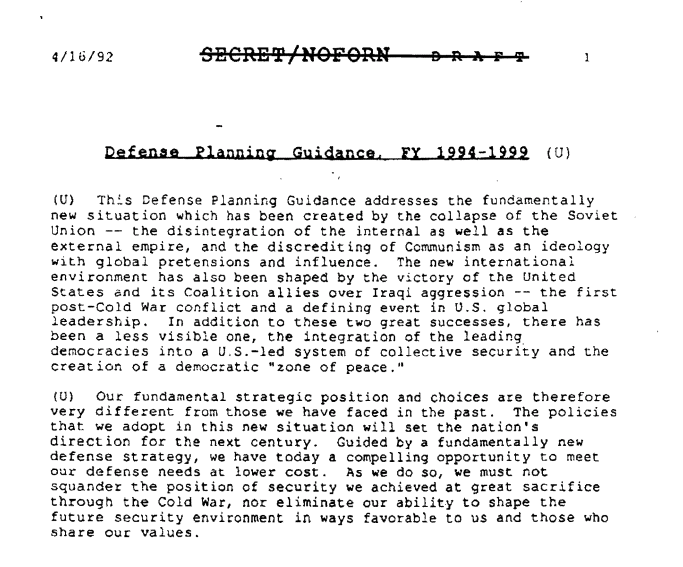
‘They’ used to say (incorrectly) the Wehrmacht never did winter offensives. ‘They’ now could say (correctly) Democrats can’t do offensives at all.

Facebook burps and random tweets send allegedly professional politicians and paid talking heads into hissy fits. Rightists play Democrats and much of their AgitProp infrastructure like a piano. Badly, of course.

Democrats seemingly learned nothing from 2001-2008. None of them, individually, their AgitProp allies or their (moribund) institutions demonstrate any understanding of ideological politics in today’s disassociated society of ambient social connections. It’s doubtful they will learn in time to forestall Revanchism. Such congenital failure suffocates aspirations and hopes of all non-Rightists. In retrospect 2008 was indeed a fluke, made possible by economic catastrophe, a failed presidency and timely story rather than anything inherently ‘Democratic’.

A feckless Administration addicted to expediency of course undermines meme cohesion and focus. Still, it’s no excuse for others purporting to be our Thought Leaders and Meme Givers to act like it’s still 2005 and the Movement controls all branches of government. Yet that’s exactly what they do every day, hyperventilating over a random Facebook burp or tweet airball. One insignificant flick and an entire news cycle is given to the Rightists on their terms on their issues. Over time, the cumulative impact is that what began as some trivial Rightist gesture dictates framing of our simulacra of consensus reality. The hysterical overreactions cascade like a signal chain in an amplifier until what emerges is nothing but distortion.

Democrats and their AgitProp allies truly don’t understand that the Movement could never have coalesced and reformed without their essential – and hapless – complicity.

Of course the economy is in ruins. A failed war is inescapable. We’re not unmindful of the political terrain. Faith in government competence and legitimacy at historic lows. Not all Democratic AgitProp allies are addicted to victimhood. Some focus on identifying new candidates and new funding for the Democratic wing of the Democratic Party. Until their time, we are presented a false choice. In the end, whether on the more gentle accomodationist curve of this current Democratic clique or with the spasmodic inchoate raging of the Rightists, we eventually arrive in essentially the same place. One just offers the scenic route.

Post to Twitter Tweet This Post

5 Reasons Obama Is Not Reagan

August 23rd, 2010 Dr Leo Strauss 1 comment

1. RWR: ‘Mr. Gorbachev, tear down this wall!’

BHO: ‘Let me be clear: it would be within regulatory guidelines to update this wall with 21st century urban planning.’

[The next day]: ‘Seeking regulatory permits to enable freedom in no way should be construed as commenting on the wisdom of doing so.’

________

2. RWR: ‘America will always be that shining city on the hill, a beacon for the world.’

BHO: ‘We must create new green jobs. America will lead the way becoming a 13 watt CFL Mini Spiral Energy Star Twist Compact Fluorescent visible in Trenton.’

________

3. RWR: ‘My fellow Americans, I am pleased to announce that today I have signed legislation outlawing the Soviet Union forever. We begin bombing in 5 minutes.’

BHO: ‘My fellow Americans, I am pleased to announce that today I have turned over the most important element of American foreign policy to David Petraeus. David will begin prolonging the war in 5 minutes declaring he *reversed* the Taleeeeeban momentum by issuing a single press release.’

(Only one of these is a joke).

________

Read more…

Post to Twitter Tweet This Post

Washington, D.C. ‘Workers’ On Its ‘Factories’

August 21st, 2010 Dr Leo Strauss 4 comments

The Crises Of Capitalism, Animated

August 2nd, 2010 Dr Leo Strauss 6 comments

Rightist Collective Narcissism And Why Obama’s Own Fantasy Of Rational Dialogue Is Doomed

July 25th, 2010 Dr Leo Strauss 11 comments

(N.B.: this originally was posted in the comments section but upon reflection think it deserves its own post. No worries, no effort to impersonate Krauthammer or a certain Senate Majority Leader with the deliberately stylized prose. Just some observations).

Narcissism is an occupational hazard for political leaders. You have to have an outsized ambition and an outsized ego to run for office.

Stanley Renshon

The Right’s compulsive need to maintain its Narrative within which all adherents can act out their own form of idealized Self is essentially collective narcissism. That’s offered as a lay person’s experience working, talking, and socializing with them over decades. From the Newts of the world to the most vicious ‘unknowns’ (except today the latter likely have so many Facebook ‘friends’ they have their own ‘fan’ page).

Narcissistic need to support a fantasized, grandiose self-image within a larger heroic Narrative explains alot. Not just the daily evidence of disconnect between actual behavior and the projected idealized (often censoring) personality. The post 2008 purge and radicalization are inevitable consequence. A complimentary analytical framework from a conventional political/historical perspective of Movements here and on the Continent.

Narrative radicalization and escalating vehemence through cant and acting out must — by internal logic — treble when fantasy can not surmount the limits imposed by Objective Reality (say Nov. 2008). Obama’s victory is a crisis threatening the ability to segregate their disassociated fantasized self-image with their often fragmented and undeveloped self. Why anyone remotely close to the Movement who said after defeat “now is the time for introspection” was doomed to be mau maued and kicked off the island. And Lord help you if there was a photo with you hugging Obama . . .

On one extreme one gets birthers. Another? Secession. And so on. They’re really the same. Their commonality is an irrational imperative to retreat to a safe Narrative that protects their idealized, fantasy Self. From that Barlett-esque non-emprical world adherents safely can continue to use the objective external world as a mere prop in their own internal movie.

This is in marked contrast with more normative modes of collecting and processing input, cognition and productions of ‘knowledge’ below:

Read more…

Post to Twitter Tweet This Post

Caravaggio Reconsidered (Slightly Revised)

July 16th, 2010 Dr Leo Strauss 6 comments

We’ve always been drawn to Michelangelo Merisi da Caravaggio’s art. A brawler, fond of the grape, prison escapee and quite likely if he had a cell phone at the time, capable of leaving Mel Gibson-esque voice mails. He’s also the most written about artist of the modern era. More than Shepard Fairey’s ‘hope thing’. Caravaggio’s body of work continues to inspire, perplex and in many ways galvanize our societal descent into post-textual visual metaphorical soup.

A contingent have mantained Caravaggio invented Hollywood lighting. If so, its natural artistic expression is being left behind along with production moving to Vancouver, etc. and green screening everything. His alleged influence now pales compared to the retinal violence afforded by ritual Autodesk and Avid abuse. ‘We’ll fix it in post’. But maybe that’s ironic full circle.

Back to Caravaggio the man. Now David Hockney for one thinks he’s finally figured out how Caravaggio did it – his fantastic surreal lighting – after all those centuries.

In effect, he pieced his compositions together from a series of vivid fragments thrown by a mirror and/or lens, in other words, a form of camera obscura. His work would then have been a sort of collage of quasi-photographic close ups – which is indeed exactly what it looks like.

The use of the camera obscura by artists was advocated by the Italian writer Giambattista della Porta in a best-selling book entitled Natural Magick (1584). Della Porta was in communication with Caravaggio’s patron Cardinal del Monte.

The art historian and dealer Clovis Whitfield, writing in the introduction to the catalogue of Caravaggio’s Friends and Foes exhibition at Whitfield Fine Art in London, suggests that in the early 17th century “such images… must have created as much wonder and amazement as 3D movies do today”. The science of optics was a hot topic of the day, and also a dangerous one. Della Porta found himself before the Inquisition and his books were banned in the 1590s. In 1600, Giordano Bruno was burned alive in Rome, in part for his scientific activities. If Caravaggio was using such methods, there would have been every reason to keep it quiet.

This idea remains highly controversial. To accept it would involve something like a paradigm shift in art history. [emphasis SLS] Many feel that for an old master to have worked in this way would have been cheating. Hockney thinks the reverse: “What Caravaggio was doing wasn’t easy, in fact it was wonderfully creative. It’s a very clever way to make a picture, very skilful, very original.”

Smoking-gun proof is lacking, but the camera obscura hypothesis explains a great deal about Caravaggio’s work, and life – the whiff of mystery and brimstone that hung about his reputation, for example.

Personally, I was impressed by a demonstration of the method Hockney suggests Caravaggio used. Hockney’s assistant, David Graves, stood outside in strong sunlight while his image was transmitted via a mirror and lens into a darkened room where I stood. He appeared upside down, and in a dark void (the result of the optical process). The colours of his face richly saturated as in a 17th-century painting. The effect was startlingly like a Caravaggio.

His precise technique is still a mystery and not just for competitive reasons. As noted, any such optical and lense experimentation had to be hidden because of Vatican-sanctioned suppression, torture, inquisition and murder for heresy. Just one more thing to keep in mind when a Bill Donohue-type declaims how much the Vatican supported open scientific inquiry. As one Fox thinker observed of Galileo, ‘He had to die eventually.’

Post to Twitter Tweet This Post

Categories: Acolytes In Media, Culture, Technology Tags:

On Andy Grove, Mercantilist Schwerpunkts And Free Trade Kool Aid

July 6th, 2010 Dr Leo Strauss 27 comments

If one is serious about re-industrializing the United States to create high wage manufacturing jobs, one probably should shun hapless pundits and other ideological purveyors. To be fair the braying comes from all sides: ‘Free Markets’ cant or the tiresome “What Would Hamilton Do Today”? As par for the course, the most visible ‘experts’ provided to us on the cable news wall often can’t read a spreadsheet, think EBITDA is a new social networking site, haven’t actually worked for an industrial company or consistently met a payroll.

Economic development requires a more serious mind. But then, one could say the same about war. And look at that.

Even more than killing dark people, a sustained development concept in Bubble-addicted America is particularly challenging. Americans expect to earn inflated income by performing essentially meaningless and frivolous output. Haven’t we essentially outsourced the wars, too?

Andy Grove laments the decline of the hi-tech industry’s domestic manufacturing. He’s right that it is essentially now a (temporary) branding and marketing channel for Asian manufacturers. “Made in China, Designed By Apple In California”. Our friend comment shared this link from Grove on point: Sadly, one has to ask: where precisely have you been for the last 30 years, Andy? (Let’s overlook the Intel billions invested in India, Malaysia and China along the way.)

Can Americans Even Have An Intelligent Policy On Re-Industrialization?

Americans we will assert seem generally uninterested in development matters, especially historical economic development. So it’s important to put forth first principles to frame a conversation. Say a president visits a failed state like Michigan. He declares ‘new manufacturing jobs in America’ [cue ritual applause] will come. But before that can happen, we should be clear on what’s the goal of American economic activity? To promote *consumer* welfare measured in the here and now? Or to develop a social and economic infrastructure that maximizes *societal* welfare in the medium to long term? An infrastructure to enable other economic and social expenditures (military, standard of living, life expectancy, etc.)?

The first is America 1960-2010; ‘consumer welfare’ is the metric. The second? Delayed consumption, lower standards of living and capital accumulation for the future. How one answers these questions determines divergent paths.

The Four Models

For statesmen or serious students of Great Power history (this excludes by definition march of trumpets Boys Life ‘history’ ala Victor Davis Hanson et. al.), there are 4 essential, successful modern development models: (a) the British until 1870s (the end of the mercantalist First Empire and commingling with ‘Wealth of Nations’ and ‘White Man’s Burden’ era); (b) the Germans from 1870-1914; (c) the American from 1880s-1960s; (d) the Soviets 1917-1970s; (e) Japan from 1945-1991; (f) the Four Tigers (copying Japan); and (g) China (1980s-today). The latter three are essentially variations on the Japanese dual economy mercantalist approach. (The BRICs are more notional, still in China’s shadow).

Read more…

Post to Twitter Tweet This Post