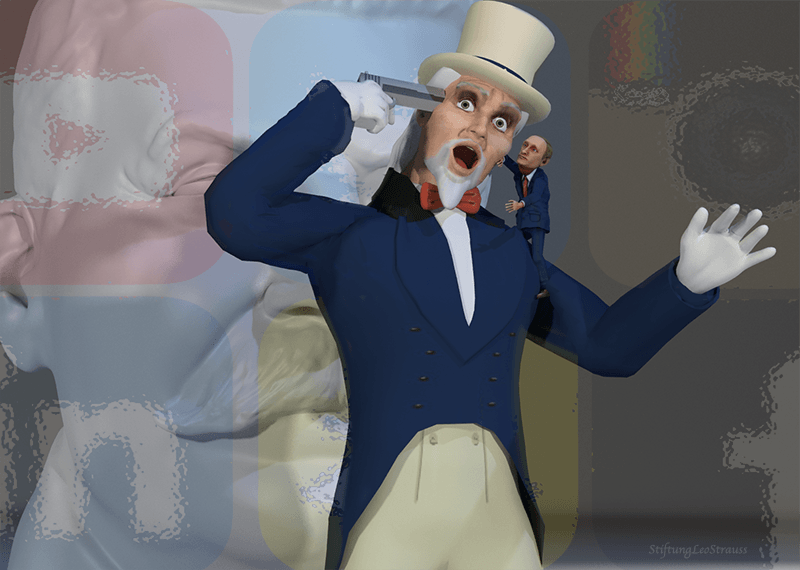
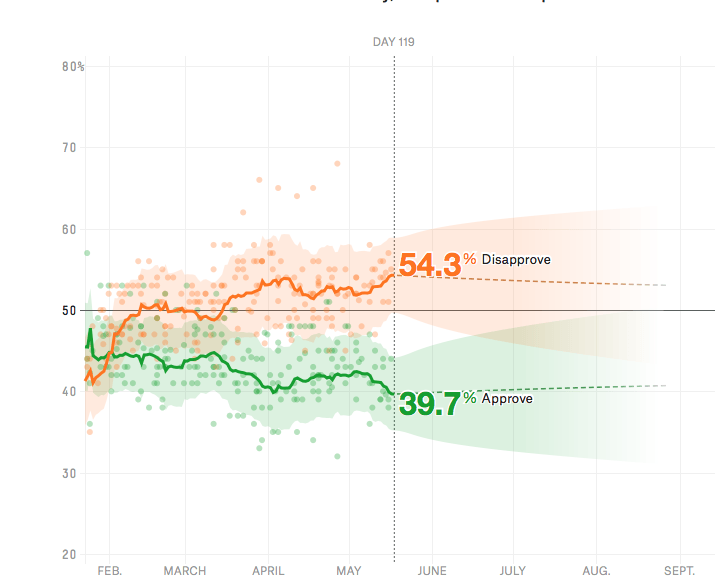
In the beginning, there were Neocons.
Today’s collapse of American conservatism into white racial, irrational tribalism begins with Neocons. At least the latest beginning.
This statement is simple intellectual and political history. What follows eschews invective and ad hominem labelling.
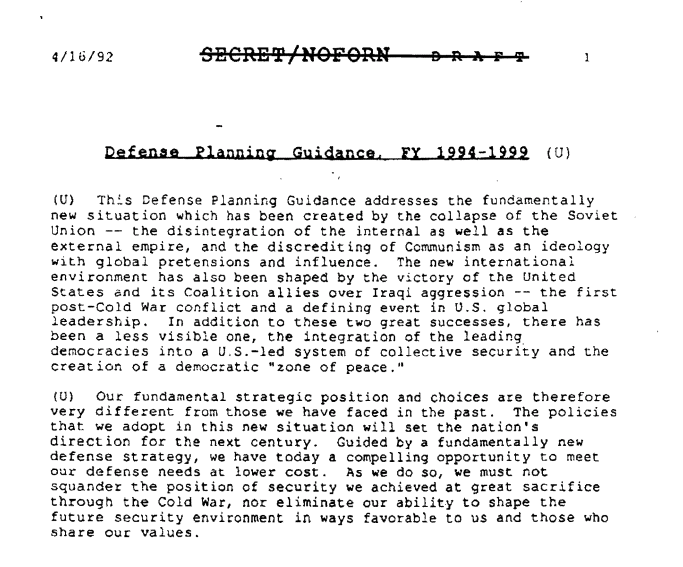
We begin with the 1991 collapse of the Soviet Union. Wolfowitz, then at DoD, transmuted Krauthammer’s (in)famous “Unipolar Moment” essay celebrating U.S. ascendancy into a draft Defense Planning Guidance (DPG) in 1992. Wolfowitz’s draft DPG called for American outright pursuit of overt world hegemony in perpetuity. The President Bush, Brent Scowcroft and James Baker administration directed Secretary of Defense Cheney to spike it. But neither Cheney nor Wolfowitz forgot.
 Out of power during the Clinton years, Neocons refined the 1992 vision among other initiatives including Chalabi and Iraq regime change.
A notable adjunct? The Rumsfeld and Cambone 1998 Ballistic Missile Defense Commission. Their distortion of intelligence on Iranian and North Korean missiles an important harbinger. Grover Norquist and the conservative Movement (especially evangelicals) coalesced around George W. Bush in 1998 (Grover telling me in Germany). With Cheney later in place as VP, Rumsfeld and Neocons rode along.
Neocons from their origins in the 1930s always were a small contingent lacking organic political organizational roots of their own, riding other, stronger political entities: the Left of the Democratic Party until 1974 and Saigon’s imminent fall, then their migration to the Republican Party. The 2000 campaign no different.
Kristol’s 2006/7 alarm at Bush’s potential pragmatism is instructive. He threatened to take his magazine subscriber list and leave Republicans for Democrats again. Kristol et al. in effect did that 2016-17. The GOP party, base and organizational reaction? A shrug. Neocons’ lack of organizational roots an important aspect of the white racial emergence and Trump.
After 9/11, Wolfowitz, back again at DoD, and Cheney resurrected his earlier 1992 DPG with terrorism added. The White House published the re-emerged concept as the official 2002 “U.S. National Security Strategy.” The document still is starkly radical.
Key figures in the later conservative white racial collapse did not understand the radicalism. Like many Americans, they did not know then today’s now widely understood intellectual history of Neocons, fundamental differences with Paleocons, or what the post 9/11 Iraq decision-making and 2002 strategy would unleash upon the world. Rumsfeld and Cambone’s obsession with BMD and breaking the ABM Treaty with Russia in 2001 part of the mosaic.
We Americans tell ourselves many lies in 2018. One of the most pernicious? Republican tribalism and uncritical Trump embrace is new. (Just ask the Dixie Chicks). Grover Norquist, for example, allowed one short presentation in early 2003 at his critically influential Wednesday Meeting that questioned invading Iraq. Not an easy political call. Remember: Republicans on the Hill refused to criticize Bush for Iraq, Afghanistan, Katrina or even Rumsfeld until late 2006.
The Republican apparat used fear to keep many conservatives appalled by Bush and Neocon recklessness after 2003 silent. The few to speak up like Bruce Bartlett quickly ostracized. Cheney’s OVP – truly a fearsome, vengeful operation – combined with Rove and a host of others such as DeLay especially to penalize dissent. We Americans airbrushed this critical political truth away.
For example, CATO, a libertarian think tank with a then modest role in conservative Movement and U.S. foreign policy thinking, purged staff who spoke out against the Iraq War and Neocon foreign policy in general. The signal sent in Washington at the time very clear: toe the line or disappear.
A small publication called “The American Conservative” emerged as a singular exception. A Paleocon magazine started by Buchanan, his fellow anti-Semite “Taki”, and a passionate Buchanan associate with cosmetic inheritance wealth, it became a niche, visible forum for the few GOP critics of Neocons and the Iraq War.
The pieces’ quality varied. Items from Bacevich and others offered strong historical and theoretical critiques. Other authors fell short. That GOP voices spoke out against Bush and Neocons at all? A show of bravery. (Disclaimer: to support this unique voice critiquing Neocons within the GOP, when they ran into financial trouble circa 2005 I offered to help them organize a prospectus and road show – an offer never taken up).
They weren’t alone, of course. The broader Realist anti-Neocon movement in Washington, D.C. also had “The National Interest”, purchased by Dmitri Simes. I first met him in the early 1980s. He’s the subject of much anti-Russia social media passion now. Back then, most forget or don’t know when he emigrated to the U.S. in the 1970s, Senator “Scoop” Jackson and Paul Nitze were among his first supporters. Nitze and others dined at Dmitri’s Chevy Chase home socially and Nitze and Scoop Jackson (note Perle worked for Jackson at the time) welcomed Dmitri’s Realist perspectives. I return to Dmitri Simes and “The National Interest” below.
By the mid 2000s, U.S. mass media began coverage of Iraq failure, misrepresented intelligence and Neocons, with some drawing links to Israel. The fear of speaking out began to break. Walt and Mearsheimer famously raised Israel in 2003 and ignited a firestorm storm, including charges of anti-Semitism.. The Israeli 2006 War on Lebanon and U.S. Neocon calls for escalation into Syria only exacerbated matters.
At that time Dmitri Simes, Dov Zakheim (he left the Bush DoD) and Katrina vanden Heuvel met in D.C. to explore the possibility of a joint Realist alliance against Neocon foreign policy from both the Right and Progressive (no Stephen Cohen there iirc). These first links between “The Nation” and “The National Interest” were not about Russia at all, but dedicated to reclaiming empiricism for U.S. politics from Neocon AgitProp. (I agreed with the meeting, the analysis and conviction that Neocons in power a threat to U.S. interests).
The 2001-2008 Realist battles with Neocons (and later in 2014-2018) date back to the late 1970s and first Reagan Administration. Team A/B attacking CIA, nuclear deterrence, counterforce, the Reagan buildup, SDI, the Perle-Burt battles over Pershing II and GLCM deployment – all earlier struggles by many of the same people for much the same reasons.
Later, personnel would shuttle among “The Nation” and “The National Interest”. Anti-Neocon alliances in 2006 claiming to champion empiricism morphed later into anti-Maidan, anti-EU, objectively pro-Russia, anti-liberal democratic advocacy. The specific Neocon critique became a general lazy slur, synonymous with American internationalism. (Add Grover’s burning grudge against McCain for Abramoff among other things). To stop generalized “Neocon” alleged perfidy, expediency ruled, including the same untruthfulness and anti-empirical AgitProp that Realists originally (and correctly) opposed. Stare into the abyss as the saying goes …literally.
Dmitri Simes (based on personal observation, his Russian TV appearances and friendship with those who have known him) combined his original Realist anti-Neocon convictions from the 1970s/1980s with personal ambition – to be a World Historical figure. His Russia focus led the Nixon family to ask the Nixon name be removed from his organizational activities.
Some suggested by 2017 he thought about transition to business. Perhaps. Being around Greenberg from AIG et al. on his Board would be tempting – much like Perle and Conrad Black, let alone witnessing Russian oligarchs. His connections with Moscow still proved useful to senior, respected U.S. foreign policy, security and intelligence figures before and after 2016.
Regardless of motives, Dmitri Simes objectively moved from Realist analyst to aspiring activist moderator of U.S.-Moscow relations to de facto intellectual Moscow lobbyist. “The National Interest” extended anti-“Neocon” family would evolve to include white racialists, including inviting them to private meetings with Kislyak, etc.
The sloppy “anti-Neocon” advocacy surrounding “The National Interest” included labelling the Democratic Party in 2016 as “the War Party”. One published there using that label deserves recognition for his battles with Cheney, OVP and the Neocons in their war on CIA and intelligence estimates 2002-2006 before his retirement. Yet, on its face it’s absurd. With Trump, Bolton, Cotton, Pompeo et al. – it’s worse: a bad, bad joke. On us all.
As more becomes known about “The National Interest” and Dmitri Simes’ March 2016 role in orchestrating the Trump April 2016 foreign policy address with Russian Ambassador Kislyak in front row (after Russians offered the Trump team Clinton dirt), editor Jacob Heilbrunn’s claim of innocent disinterest is untruthful. As we wrote at the time on Twitter in April 2016, the entire nexus of events and invitees deserves greater scrutiny than we have seen till now.
Contrary to Heilbrunn’s 2016 statements, we know now that Kissinger, Simes and Kushner met in March and discussed hosting the event. We also know that “The National Interest” agreed to supervise the invitations to both a public and private event (which included Bannon acolytes). Furthermore, Richard Burt with input from Miller helped write Trump’s still undeniably incoherent speech. These machinations with Trump are an example of the deception they long claimed were a Neocon hallmark. Butina aside.
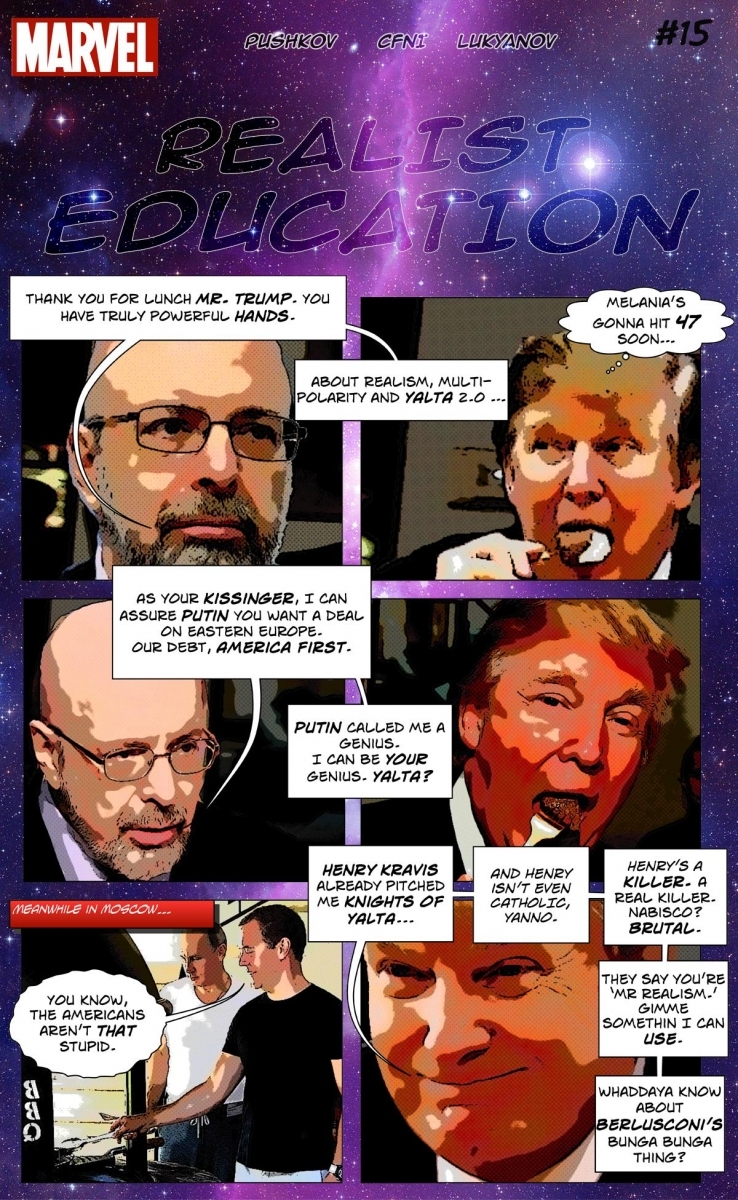
A Sculptor Bemoans The Clay?
Yet Dmitri proved to be a more shrewd observer of U.S. politics than Neocons. Grover Norquist’s position on his Board reveals he understood Neocon political weakness better than Neocons themselves. Grover and his vast network both at Americans for Tax Reform, his Wednesday Meetings that lead D.C. Rightist political operatives, his Board position at NRA – all indicia of structural, organizational, institutional political reach through professional operatives and with grass roots. (Dmitri would embrace Grover’s key issue that the one thing the U.S. could never do is raise taxes). This kind of thinking outflanked Neocon media presence with political sinew. Of all the strands of the U.S. Rightist Movement except for evangelicals/the Religious Right, Dmitri chose relationships with real political power.
Around the shoestring “The American Conservative” back in 2006, passions about Neocons and Israel ran extraordinarily deep. For example, a (Jewish) former wire service writer closely tied to it would hold forth ad nauseam on Israeli political arcana, asserting dark connections to irrational U.S. foreign policy across the globe. He was not alone in background and conspiratorial critique.
Others circulated emails about Jabotinsky, fascism and Zionism as if overt historical facts available on Alta Vista and then Google were a new (and true) Protocols of Zion. QAnon conspiracists today would be humbled. Criticism of Neocon adventurism morphed into anti-Semitism. That anti-Semitism then quickly devolved into embracing white racialism. A decade before Trump.
A senior “The American Conservative” and FOX News figure in 2006 first explained to me in my car the ‘scientific’ basis for white racial supremacy and explicit Black genetic and cultural inferiority. The alleged ‘science’ behind his 20 minute exegesis? Straight out of the Corporal’s “Table Talk” tarted up by faux Silicon Valley bromides. He urged study and following the white supremacy organization VDARE and its founder Steve Sailor. (If you knew me and my family history with internment camps, a laughable idea).
This burgeoning emergence of white racialism in the GOP had zero to do with economics. Zero.
The 2006 date is significant. “The American Conservative” hired noted white supremacist Richard Spencer in 2007 as an editor. 2007 is the same year the FOX News figure above explained to me in a mediocre Asian restaurant in Rosslyn, VA one block from “The American Conservative” office that he would rather live in an America under white fascist rule (explicitly, the term was “a Franco America”) than deal with multi-ethnics and ‘multiculturalism’. This person in 2008 would run a GOP presidential campaign for a later key Trump ally all the way to convention for (allegedly) anti-Neocon reasons.
His personal arc is tragic. As a former White House senior aide and winning GOP presidential campaign political director for a president, he was passionately tolerant. (He met and befriended Grover Norquist when they worked together in the earlier Reagan Administration).
When I first met him in the mid 1990s, he was a creative, almost libertarian who suffered Rightist abuse for advocating environmental policy and political tolerance for American alternative lifestyles. His white supremacy radicalization by 2006 blossomed into a Bannon collaborator, he helped pimp Milo and advocated in 2016 for racial internment camps in America.
This thumbnail sketch of one individual illustrates how original anti-Neocon criticism led to broader radicalization. It also pre-signaled Bannon and later Trump Administration embrace of Israel and Russia. From initial virulent anti-Semitism circa 2006 he said in 2015 “They’re actually just like a 51st State” – i.e., their ethnic focus and opposition to surrounding Other people made them allies and even models. “Camp of Saints” indeed.
“The American Conservative” says it fired Spencer in December 2007 for extreme views. One might ask what could be more extreme than Buchanan, Taki and the FOX person and Ailes confidante advocating white fascist rule in 2007? Among other signals? Being indiscreet, obviously.
Spencer didn’t really get truly fired; he stayed in the family by going to work for Taki. Taki and Buchanan, after all, gave the publication birth. Herewith Taki today:
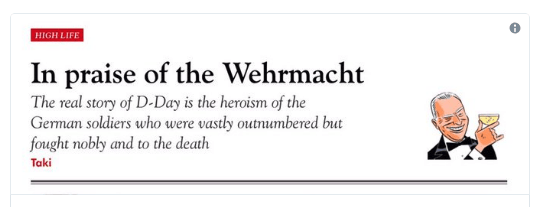
Taki is still recently published in “The American Conservative”.
Spencer, of course, mentored Stephen Miller now in the White House while he was at Duke; Miller’s praise for Spencer fulsome. Spencer later married Dugin’s English language translator. Dugin is a Russian fascist and devotee of Evola, Heidegger, Le Pen and the French New Right. (Spencer’s wife and Russia Today’s Editor in Chief Margarita Simonyan blocked me on Twitter in 2014 for mocking Russian fascists’ bad taste in British heavy metal bands).
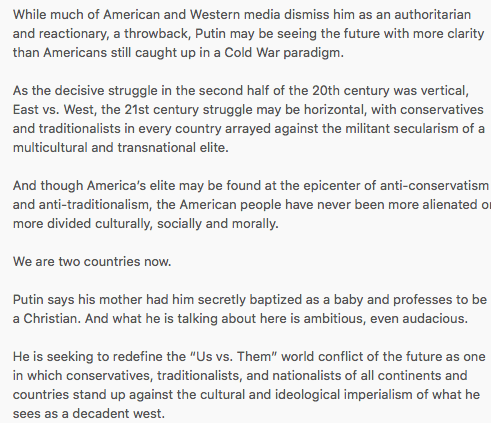
Senator Sessions hired Miller in 2009. Miller promptly began actively creating an anti-immigrant network on the Right that used immigration to coordinate white racial nationalism and incipient anti-democratic authoritarianism. Contrary to tout le monde in 2017, Sessions and Miller’s work in D.C. occurred in the open. Spencer coined the term “Alt Right” in 2010. Buchanan in 2011 first mooted an alliance between Russia and the ‘true’ GOP base against the American liberal democratic idea. By 2015, here is how he framed it:
By the time of Trump’s “The National Interest” foreign policy speech in April 2016 – these relationships and the links to Breitbart, the Mercers (who formally abandoned Cruz shortly afterwards) and Bannon – all of these facts should have screamed danger to Washington, D.C. Yet professional U.S. political media did not grasp what was happening in front of them until too late.
These descriptions are illustrative. Others show more. The former wire service writer above would later join Russian foreign policy panels and actively criticized the general “Neocons” running Obama’s foreign policy.
Victoria Nuland became a symbolic stand in for Responsibility to Protect interventionists like Power, Slaughter, Libya 2011 and then American internationalism overall. Another radicalized by this anti-Neocon circle – and avowed critic of Bibi and Likud – would endorse Trump officially in 2016, put his name on campaign material and sacrificed moral convictions to “stop the War Party.” All to see Bolton, Bibi and Kushner at the aorta of U.S. foreign policy. One can’t make it up.
Again, the Washington, D.C. status quo missed the tectonic assaults happening right in front of them. “The National Interest” in 2014 published a critique of Norm Ornstein and Tom Mann for calling out ‘asymmetrical GOP radicalization’ in their 2012 book. I think the world of Norm Ornstein as intellect and person; yet the racial, authoritarian radicalization above was so, so much worse by 2012 than he could have imagined. Debating Pew surveys in 2014 missed both the forest and the trees for acorns scattered on the ground.
“The American Conservative” today is under new ownership. How much has truly changed? It still publishes Buchanan. And Taki recently. Its Board Member, George D. O’Neill – a Buchananite like Patrick Erickson in the DoJ Butina indictment – embraced Butina and Torshin (including paying some of Butina’s bills) as set forth in the public record. If it means anything, one of the figures discussed above allied with Bannon dismissed it as too libertarian for his tastes by 2016. Maybe not the same toxic Patient Zero of originally anti-Neocon then pro-Putin white racial authoritarian radicalization in GOP circles, yet the echoes have not fully faded. As Butina makes clear.
We return to the Original Sin: Neocons 2001-2008. None truly paid a price for the death and strategic disasters unleashed. None wrestled with guilt and shame as McNamara, Rostow and others or tried to atone. (Who here remembers the scandal when Carter first nominated Vance, linked to Vietnam?) Many thrive. Trump was not the first to see shamelessness succeeds.
The question remains: how to re-engage the radicalized GOP based exploited by the entities and persons above? And expunge the lazy “Neocon” boogeyman as a get out of jail free card for those who covertly advance other objectives?
U.S. internationalism and power can not be sustained if 35% of the electorate and the most important, decisive primary voters of one political party remain radicalized. How to begin?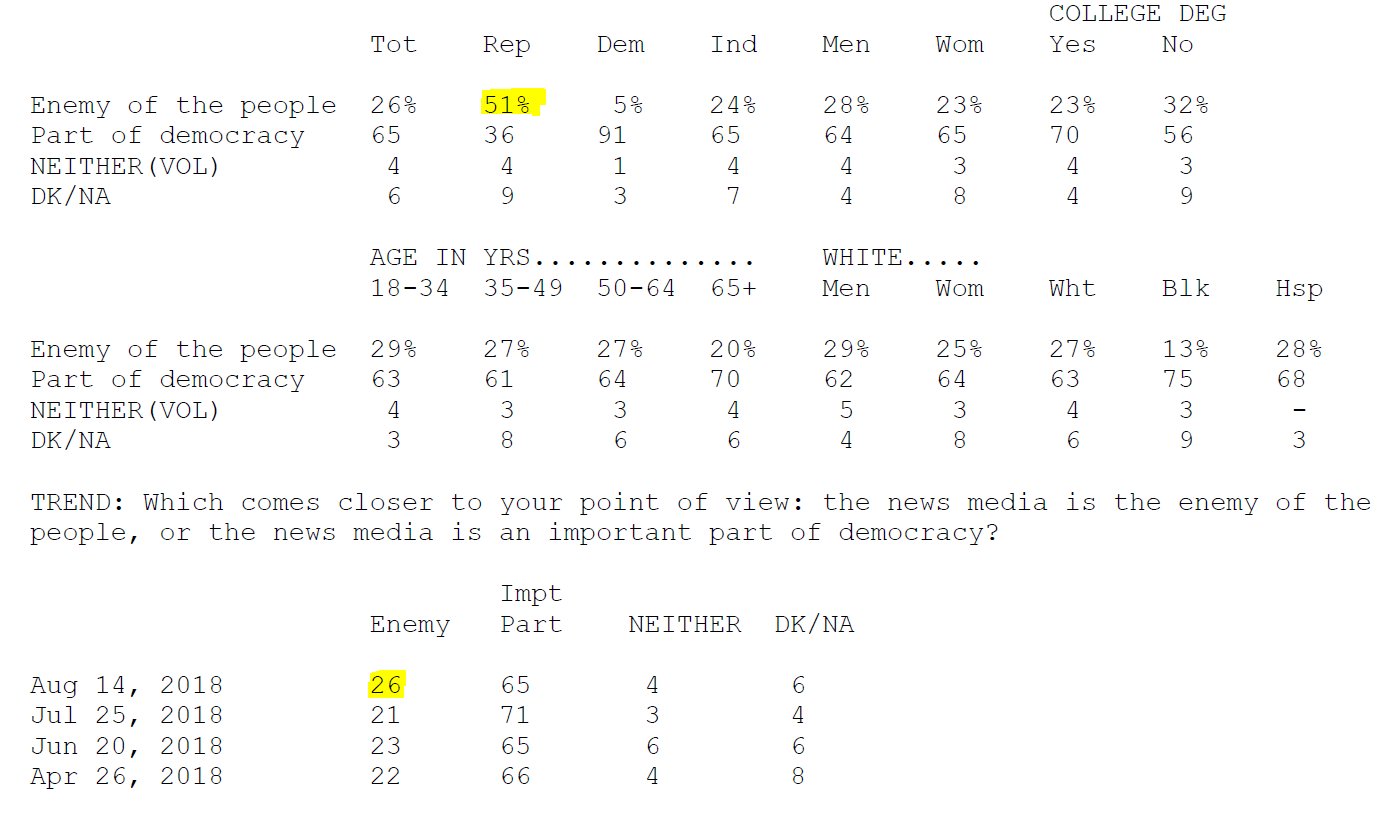
Formerly complacent U.S. status quo requires a further shakeup. Objectively for better results, subjectively as a demonstration. They completely missed the Neocon corrosive impact on American internationalism’s legitimacy in both the GOP base and the Sanders left. The poisonous cynicism is as profound as the U.S. financial class skating for the Great Recession. Of them all, Frum has come closest to realizing the colossal damage done by obliquely referring to it vaguely in a tweet or two (if he has elaborated on that, mea culpa). See, e.g., Kristol in 2018 declaring “We won in Iraq.”
Neocons embedded into media landscapes won’t willingly fade away now. Or seek the now far too late healing gesture of owning their mistakes (2001-2008 and later Libya). Many are now seen as leading anti-Trump voices.
Our goal should focus on reclaiming a liberal democratic U.S. based on Enlightenment concepts of individualism, rationality and law. Neocons trying to re-position themselves as the face of anti-Trump democracy, U.S. internationalism and (gallingly) respect for empirical truth should not derail but their political lives and impacts not ignored. Politics is the art of addition.
Our first step? Core Enlightenment principles at the heart of the American idea are as much an ideology as Counter-Enlightenment, racial anti-democratic Rightism. Ideas require promulgation, reinforcement and engagement. Americans, because we ignored Continental political philosophy, history and its footholds here, find this a novel concept.
Secondly, we must speak truth about how the U.S. status quo mindset after 1991 did result in vast economic and social injustice. U.S. political structures failed to deliver accountability. Acknowledging this failings opens the door for solutions based on empirical truth. Simply put, U.S. liberal democracy and internationalism must retake political and social legitimacy.
If Neocons are an intellectual veneer atop organic political entities with the authentic organizational structures, note how easily the GOP base ejected them in 2016 with scant political impact. I do not for a second believe Bannon discovered that on his own at Breitbart or Trump Tower. Our post-Trump efforts must not make the same mistake.
U.S. liberal democracy and internationalism need a new bond with the American electorate. In this demotic age, C.F.R., NY Times Op-Eds and cable news TV hits (with tiny audiences) are outdated. Instead we must re-discover Dean Acheson’s willingness to travel to Minnesota at the invitation of Hubert Humphrey and make the case for internationalism directly to the Farm Labor Party. But in today’s terms. By an interactive conversation with the American people writ large that understands the importance of organizational ground presence for politics and ideology.
Twitter and social media outreach are not enough. Social media speaks to silos and tribes. Externalities, especially with Twitter, are low. U.S. liberal democracy and internationalism need face time on the ground, at the grass roots level – direct engagement from trusted local platforms from local, traditional organizations, Kiwanis, Rotary Clubs, Chambers of Commerce as well as contemporary platforms like Reddit, Discord, the vastly flawed Facebook and future iterations. The NRA, Americans for Tax Reform and other entities with vast reach show their impact. We must create new structures beyond just decaying party organizations to fight and re-win this battle last fought in the late 1940s.
Spencer and Bannon independently explained why Breitbart created Milo (with the Mercers, of course) and the Alt Right pursued young Americans with Gamergate: to radicalize the young before their beliefs matured. We must think beyond institutional and personal comfort zones and adapt. This campaign will not resemble Acheson in the late 1940s. Or Morning Joe in 2016. We must all relearn persuasive communications.
A final point. Stopping Russian election interference and political manipulation is imperative. The scale of attack on the U.S. and the West is massive. Stopping Russian attacks on U.S. democracy, however, is necessary but not sufficient. Many on social media pin blame for Trump and America 2016-18 on Russia. Others, sometimes Intelligence Community recent retirees often with little experience with U.S. domestic politics, apply their expertise by focusing on Russia.
If only it were that simple. Russia manipulation is a significant threat. Rebuffing it is the easy part. To reclaim U.S. liberal democracy, empiricism, pluralism and internationalism – the very purpose of American power – requires addressing and healing our self-inflicted Vichy wounds. For many it’s tempting to look away and point blame on Moscow. We spawned racial anti-democratic authoritarianism here at home, missed its obvious and growing danger and now all pay the price. And it’s by far the greater, tougher danger.
______
* Hat tip to The Tubes.
[UPDATE: Graphics added and nits cleaned up]