
This Collection is available to the public.
_______________________
Haven’t posted because nothing has changed. And the trajectory of likely developments along a course we’ve all covered together, yes?
The Imperial City And The World
This Collection is available to the public.
_______________________
Haven’t posted because nothing has changed. And the trajectory of likely developments along a course we’ve all covered together, yes?
When matters are bleak one can only expect Tom Friedman to rise (or sink) to the occasion. His endorsement of the nebulous ‘politically centrist Internet alternative Americans Elect’ plumbs new depths of unblinking vacuity. Harsh? In the maestro’s own words:
Our goal is to open up what has been an anticompetitive process to people in the middle who are unsatisfied with the choices of the two parties,” said Kahlil Byrd, the C.E.O. of Americans Elect, speaking from its swank offices, financed with some serious hedge-fund money, a stone’s throw from the White House.
Adding to the fin de stupide, McConnell and Reid embrace decadence by declaring the Congress unable to function as a co-equal branch of government. Dear Reader, naturally, you might say ‘of course’. Didn’t they willingly devolve into a hapless Duma under the Warlord, with Rockefeller writing letters to his desk drawer and the like? Abandoning oversight for fealty and so on? All true. Our intrepid Remus and Romulus propose a new ‘super Congress’, a formal gang of 12 from each chamber, and each party. These Supremos would be entrusted to make the hard choices that elude the merely elected.
It’s funny how it’s exactly the same idea and language that Bob Walker tried to float around D.C. in 2005. Walker was trying to solve Bush’s dysfunction. The Administration clearly couldn’t govern, oversee or make hard choices. Walker proposed creating ‘Super Secretaries’. They would be entrusted with larger portfolios to empower coordination.
We (happily) broke D.C. code by pointing out how dim it all was. Bluntly we told Walker (in an evening bull session of 12 or so organized at the D.C. offices of a performance car company) he missed the point. The institutions are fine. Hire competent secretaries and appointees, fire the incompetent. More to the point, since the Republican/Movement apparat has spent generations attacking the efficiency of government, what can one expect when they man an administration with people who loathe functioning government in the first place. The ideology and recruitment were both proximate causes. Why not have Republicans in public embrace good government, sound non-PR-wedge issue management?
That was a lead zeppelin. A-w-k-w-a-r-d.
We weren’t invited back. Best for all involved. We’d have been twice as impatient and even less sense of lèse majesté over a congresscritter turned lobbyist. (But he’s a friend of Newt’s! Look at his clients!).
The point is that Reid and McConnell have succumbed to the same imbecility. The institutions — House and Senate — have not failed. Article I has not failed. The people in those positions are failures. The solution is not some extra-constitutional, ever more baroque organizational legerdemain. Organizational change (with incumbents staying) is passing the buck.
It’s not all Reid or even McConnell’s fault in one sense. Many of the institutional problems and people are there because of Obama. Or more precisely by Obama’s refusal to act as president. He wouldn’t stoop to use the presidency for political effect in the years before Nov. 2010 (and does so now). Remember Gibb’s laughing on national TV in August 2010 that the House might ‘go.’ Hilarious. Perhaps no one could have saved the House. We’ll leave the counterfactual stuff for Newt’s novels. Just note: Obama never tried.
We’ll close by making an observation. Political systems historically devolve into greater baroque complexity seeking ad hoc, temporary solutions not because of weakness from below but at the top. Expect more of these ‘solutions’ to come.
What to make of an allegedly Democratic president who rejects a Mitch McConnell offer of a clean debt ceiling bill (with attendant posturing)? Who instead is determined to pursue deep cuts in social security and other assistance to the elderly, the poor and the needy? Who rushes to embrace some vague effort by a handful of Senators which also promises unspecified deep cuts (while looking to insert themselves for publicity and attention)?
Those watching the inside baseball game rightfully know that counting to 60 is what matters. McConnell isn’t really a Minority Leader anyway. But did Obama even try to work with McConnell to find the few Republican votes to make it work? No. Instead, Obama reverted back to *his* preferred position, which is deep cuts, including the social safety net.

We get little satisfaction observing the Boy King’s most ardent Kool Aiders and apologists in shock. Apparently the Minneapolis NN 11 or whatever it’s branded these days featured some distraught kidz. Some netroots (Netroots? netRoots? – can’t keep up with them) blogs are positively effusive that Obama’s actions are “concerning” (when did that become acceptable grammar?) .
We in turn could say we told you so. Long time. Since 2007. And just did. Doesn’t change the Accommodationist Hell he’s foisted on us all.
The Senate group’s [new] plan, modeled on the recommendations last year of a bipartisan fiscal commission established by Mr. Obama, calls for both deep spending cuts and new revenues through an overhaul of the income-tax code.
But while its sponsorship by staunch conservatives as well as liberals suggested enough flexibility within both parties to get a deal eventually, it would be all but impossible to turn it into detailed legislation — at the moment it is a four-page outline — and pass it in less than two weeks.
Of course, the Boy King’s own actions caused him to grasp at 4 pages of talking points fluttering in the wind. Obama, more than the Movement (Grover, insert whomever here), created this manufactured political crisis. This was inevitable when he granted the Movement’s extension of the extravagant Bush tax cuts earlier this year. Without exacting *anything* meaningful in return.



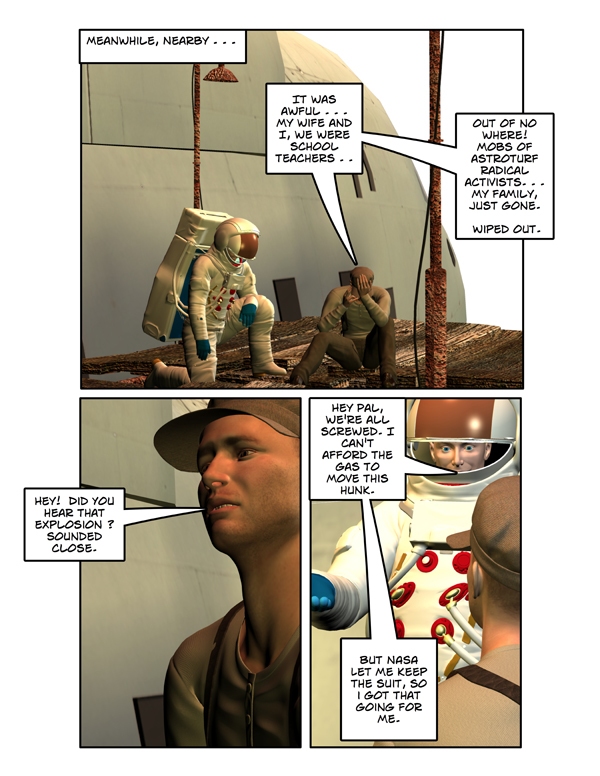
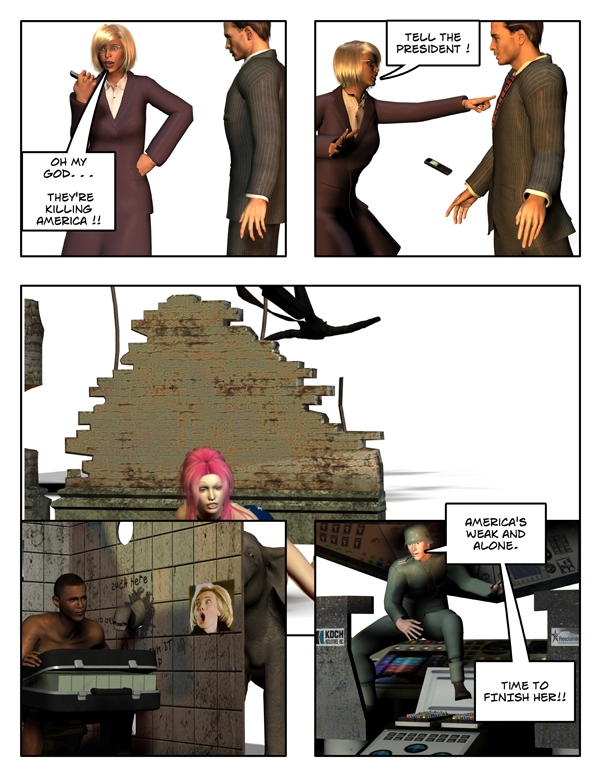
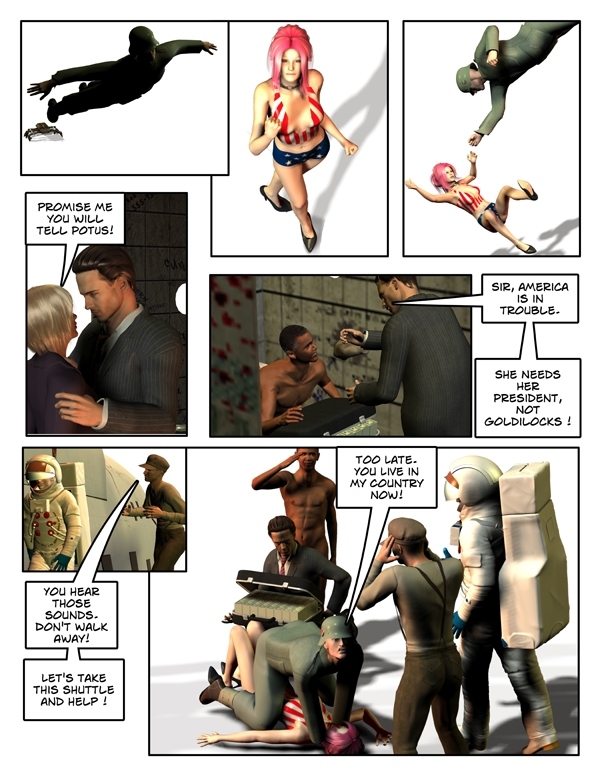
And Ish # 724 of Days of Wonder is put to bed. Excelsior !!
On Sunday afternoon, during a cruise in a reservoir adjoining the Volga River, a ship called the Bulgaria capsized and sank, killing more than 125 people, including dozens of children who got trapped below deck in a playroom. As passing ships picked up survivors in the water and news of the disaster spread, the nation fell into mourning, and some observers brought up the sinking of the Titanic in an effort to express the scale of Russia’s grief. But the comparison fails for one important reason. The Bulgaria was not a masterpiece of engineering on its maiden voyage, as the Titanic had been in 1912. The cruise ship was 56 years old when it sank on Sunday, becoming another example of the rotting Soviet-era equipment and infrastructure — barely kept up yet still in use — that have made such disasters so familiar in Russia today.
Wait, there’s more.
What Medvedev failed to mention was the scope of Russia’s broader infrastructural decay, an issue that arises after every major industrial catastrophe, but quickly tends to fade again. In the past two years alone, Russia has seen a huge methane blast at a coal mine (about 90 dead), a turbine explosion at its largest hydro-electric dam (75 dead), another Antonov plane crash in Siberia (11 dead), as well as a handful of major blackouts, gas blowups and the countless deaths caused every year by the dire state of Russia’s roads.
All these accidents are normally blamed on human error or misconduct, which allows the government to save face by firing or jailing the guilty parties. But many businessmen have started lobbying for the government to pay attention to the country’s deeper infrastructural needs (instead of splurging on vanity projects like the 2014 Olympic Games in Sochi). One of them is Alexander Lebedev, a billionaire who owns a fifth of Aeroflot, Russia’s national airline. The sinking of the Bulgaria, he says, is just the latest symptom of Russia’s skewed priorities. “The industrial base of the country is still mostly a product of Stalin, Khrushchev, Brezhnev,” the three longest-serving leaders of the Soviet Union, “and that was not such high quality in the first place,” Lebedev tells TIME. “If you scratch the surface of the city of Moscow for example … everything is very old.”
Ok Stiftung, bringing late news to the show, again — we can hear it now. Would you be surprised if we mentioned to you that the Washington Metro is already collapsing and failing? That if a foreign power imposed this technological terror subway on any American city it would be an act of war? Difficult to gauge the full magnitude of suckage. Suffice to say, some paunchy wonks in wrinkled khakis were sighing very loudly while ostentatiously looking at their watches. So you see the danger.

How nice to know then that the D.C. Metro’s “plan” is to pay almost a billion dollars to a Japanese company for new subway cars (from ‘Unsuckdcmetro’ site). Metro’s following tradition. The original 1977 cars were from Italy. Still, in time of near economic paralysis one would think somewhere, somehow an American company could be found to build subway cars. Maybe the next set will be from Russia.
When the Metro first opened it was like going to EPCOT Center. Bechtel made these amazing tunnels. No coins, using futuristic farecards. Carpeted cars. Blinking lights signaling an arriving train. Sure, the Peanut Farmer was around but Metro proved America built the future. The debut system covered a few stations only. It’s still comparatively tiny in terms of overall track mileage. The City’s might be grittier but it can take you almost anywhere. (WASP Georgetown, for example, refused a station, afraid ‘undesirable elements’ might emerge like a CoD re-spawn point from Hell. And how well-heeled McLean, VA howled in protest a new extension might disturb their outsourced-wealth).
Sad to see the system literally fall apart before our eyes. It’s not uncommon for breakdowns to strand commuters for 40 minutes. Americans also apparently can’t keep an escalator in operation. A couple of stations are deep. The Vladgrad subway is even deeper than the Metro because of the water table. Somehow, the above reports notwithstanding, that subway in our memory is more reliable than 21st century American.